Free Stuff Near Me: How to Find Free Things in Australia
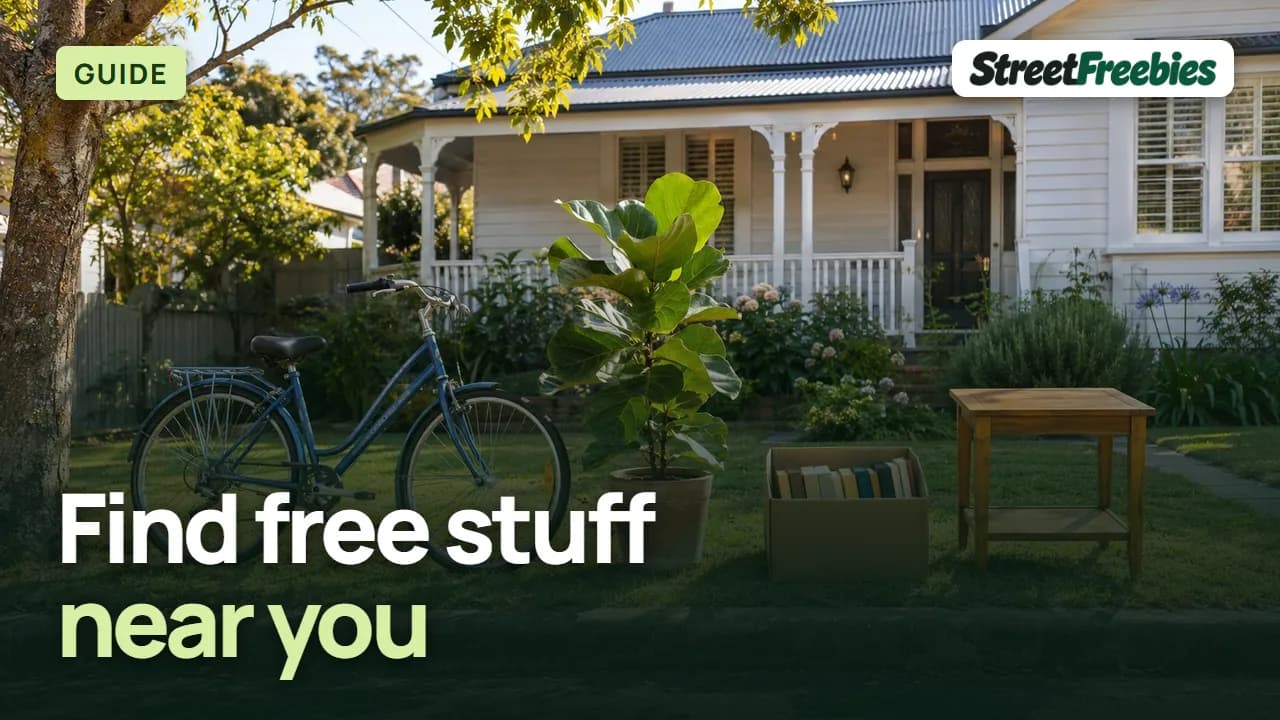
The quickest way to find free stuff near you in Australia is to check a local giveaway site like StreetFreebies, which shows free items closest to you first. Kerbside freebies, local gifting groups and council reuse or tip shops are also worth checking, and alerts help you get there before others.
Where can I find free stuff near me?
Start with a local giveaway site that sorts items by distance, then add kerbside spotting, local gifting groups and your council's reuse options. Free things move fast, so the closest and newest listings are the ones worth acting on.
Most free items in Australia come from people clearing out: moving house, renovating, downsizing, or making room after a new baby arrives. Furniture, plants, toys, building offcuts and small appliances turn up every day in most suburbs, in cities and regional towns alike.
The trick is not knowing one secret source. It is checking a few good sources regularly, being ready to collect quickly, and being the kind of collector people are happy to give to.
How does StreetFreebies help me find free things nearby?
StreetFreebies is a free community website, an initiative by ComingWave in Sydney, where people give away things they no longer need and others find free things nearby. You can browse without an account, and items closest to you are shown first.
Every listing is one of three types, and each works a little differently.
- Left outside: the owner has put the item outside for anyone to take. It is first come, first served, and listed for 24 or 48 hours.
- Kept inside: the item stays inside. The owner chooses mornings, afternoons or evenings, you request a 30-minute pickup time, and the owner approves one person. The listing shows the address. Listed for up to 72 hours.
- Community spotted: someone saw the item on a public kerb or nature strip and posted it. The listing shows whether there was a visible FREE sign or "No sign: spotted on the kerb, check before taking". Listed for 6 to 24 hours.
Signed-in users can vote "Still there" or "Gone" on outside items, which helps everyone avoid a wasted trip. Nothing on the site may be sold, swapped or offered with conditions, so everything you see is genuinely free.
How do I find free stuff near me, step by step?
Here is a simple routine that works well for most people.
- Step 1: Open StreetFreebies and allow location, or pick your area from the suburbs list.
- Step 2: Filter by what you need, such as free furniture, baby and kids items, or home and garden.
- Step 3: Check the listing type. Left outside and Community spotted items need you to move quickly. Kept inside items need a pickup request.
- Step 4: Read the description and look closely at the photos for size, condition and access notes.
- Step 5: For outside items, check the "Still there" and "Gone" votes and how long ago it was posted.
- Step 6: Plan how you will move it before you leave home, including a second person for heavy items.
- Step 7: Set up alerts so new items in your area and categories come to you.
Repeat this once or twice a day when you are actively looking for something specific.
What kinds of free stuff can I find in Australia?
Almost anything a household no longer needs can turn up free. Common finds include:
- Furniture: couches, tables, chairs, bookshelves, desks, bed frames, drawers and outdoor settings.
- Appliances and electronics: microwaves, fans, lamps, monitors and other small items in safe working order.
- Home and garden: pots, plants, cuttings, garden tools, homewares and storage tubs.
- Building materials: timber offcuts, pavers, tiles, bricks, doors and leftover renovation supplies.
- Baby and kids items: clothes, toys, books, play mats and some nursery gear.
- Bikes and sports gear, clothing and shoes, books and puzzles.
Some things cannot be given away on StreetFreebies, including weapons, hazardous materials, unsafe electrical or gas items, alcohol, tobacco, vapes, medicines, live animals and age-restricted items.
Where else can I look for free things?
Combining a few sources gives you the best chance of finding what you need.
- Kerbside items: people often put furniture and household goods on the kerb with a FREE sign, especially around council clean-up times. Read our kerbside pickup guide before you collect.
- Local gifting groups: many suburbs have community groups on social media where members give items away with no money involved. They work best when you join the group for your own area and follow its rules.
- Council tip shops and reuse centres: some councils and resource recovery centres run shops that sell salvaged goods cheaply, and some have free swap shelves or swap days. Check your council's website to see what exists near you.
- Community noticeboards: libraries, community centres, schools and some shops have boards where people post giveaways.
- Friends, family and workplaces: telling people what you are looking for still works surprisingly well.
Where can I find free stuff in my state?
Free items turn up everywhere, but kerbside activity often rises around council collections, and each state tends to use different names for them. These names vary between councils, so check your council's website for what yours offers.
- NSW: collections are often called a council clean-up or kerbside clean-up.
- Victoria: often called hard rubbish.
- Queensland: often called kerbside collection or bulky item collection.
- Western Australia: often called verge collection or verge-side collection.
- South Australia: often called hard waste.
- Tasmania: often called hard waste.
- ACT: often called bulky waste collection.
- Northern Territory: often called hard rubbish or bulky waste.
Some councils treat items placed out for a scheduled clean-up as council property or prohibit taking them, so read our council clean-up guide before you go looking through piles.
What's the best time to look for free stuff?
There is no perfect time, but some periods are often busier than others.
- Weekends, when people have time to clear out garages and spare rooms.
- Around the end of the month, when many leases start and finish and people move house.
- The days before a council clean-up or verge collection in your area.
- After renovations, school holidays and the change of seasons, when people sort through gear.
Early morning and early evening are good times to check new listings, because many people post before or after work. The most reliable approach, though, is alerts rather than guessing.
How do I get to free items before someone else?
Speed matters most for good-quality furniture and outdoor items. A few habits make a big difference.
- Turn on alerts for your categories and area, so you hear about new listings without checking all day.
- Know your measurements. Keep the size of your car boot, doorways and the space you are filling in your phone.
- Keep straps, a blanket and gloves in the car.
- For Kept inside items, request a time you can definitely make. Owners are more likely to approve someone reliable and specific.
- Be polite and brief in any message, and turn up on time.
If you miss out, do not worry. Similar items usually appear again within days or weeks.
What should I bring when collecting free stuff?
Being prepared saves a second trip and protects you and your car.
- Gloves and closed shoes.
- Straps or rope, and blankets or old towels to protect items and your car.
- A tape measure.
- A basic screwdriver or Allen key set, for taking apart larger pieces if the owner agrees.
- A helper for anything heavy or bulky.
- Bags or a box for small parts, screws and shelves.
- Your phone, charged, so you can message the owner or check the listing.
What should I check before taking a free item home?
Check the item where it is before you load it. If it is not what you expected, it is fine to leave it.
- Upholstered furniture and mattresses: look for stains, damp, mould, odours and signs of pests.
- Wooden and flat-pack furniture: check joints, legs and backs for cracks, swelling or water damage.
- Electrical items: check cords and plugs for damage, and do not use anything that looks unsafe or has been left out in the rain.
- Baby and children's items: check for recalls on productsafety.gov.au before use. Our guide to free baby and kids items safety covers cots, prams and car seats.
Our safety tips cover meeting people, lifting heavy items and what to do if something does not feel right.
What mistakes should I avoid when looking for free stuff?
A few common mistakes waste time or cause problems.
- Taking items from private property, such as front yards, driveways or porches. Never do this, even if something looks abandoned.
- Turning up without a plan to move a big item, then leaving it half on the footpath.
- Requesting several Kept inside pickups at the same time and not showing up to some of them.
- Taking things you do not really need just because they are free. They often end up as waste anyway.
- Not voting "Gone" once you have collected an outside item, which sends others on a wasted trip.
Quick checklist: finding free stuff near you
Use this list before you head out.
- Check listings near you and filter by category.
- Turn on alerts for what you need.
- Read the listing type: Left outside, Kept inside or Community spotted.
- Check votes and how recent the listing is.
- Measure your space and your car.
- Bring gloves, straps, blankets and a helper.
- Inspect the item before loading it.
- Never take anything from private property.
- Vote "Gone" after collecting outside items.
Free stuff only exists because people choose to give. When you have things you no longer need, post them for someone nearby.
Frequently asked questions
Is StreetFreebies really free?
Yes. It is free to give and free to collect, and nothing on the site may be sold, swapped or offered with conditions.
Do I need an account to find free stuff?
You can browse without an account. You need to sign in with Google to post items, request a pickup time or vote on whether an item is still there.
How long do free listings stay up?
Left outside items are listed for 24 or 48 hours, Kept inside items for up to 72 hours, and Community spotted items for 6 to 24 hours. Popular items are often collected well before then.
Can I ask someone to hold a free item for me?
For Kept inside items you request a pickup time and the owner approves one person. Left outside items are first come, first served, so they cannot be held.
Why do some listings say "No sign"?
Community spotted listings show whether the person who posted it saw a visible FREE sign. "No sign" means you should check before taking the item, because it may not be free.
Is it rude to take free stuff if I do not really need it?
Taking only what you will use leaves more for people who need it and stops free items becoming waste. If you change your mind later, give it away again.
What should I do if a free item is gone when I arrive?
Vote "Gone" on the listing so others know, then check for similar items nearby. Alerts help you get there sooner next time.
Can I find free stuff in regional areas?
Yes. Items can be listed anywhere in Australia, though there may be fewer listings in smaller towns, so alerts are especially useful there.