Council Clean-Ups, Hard Rubbish and Verge Collections in Australia
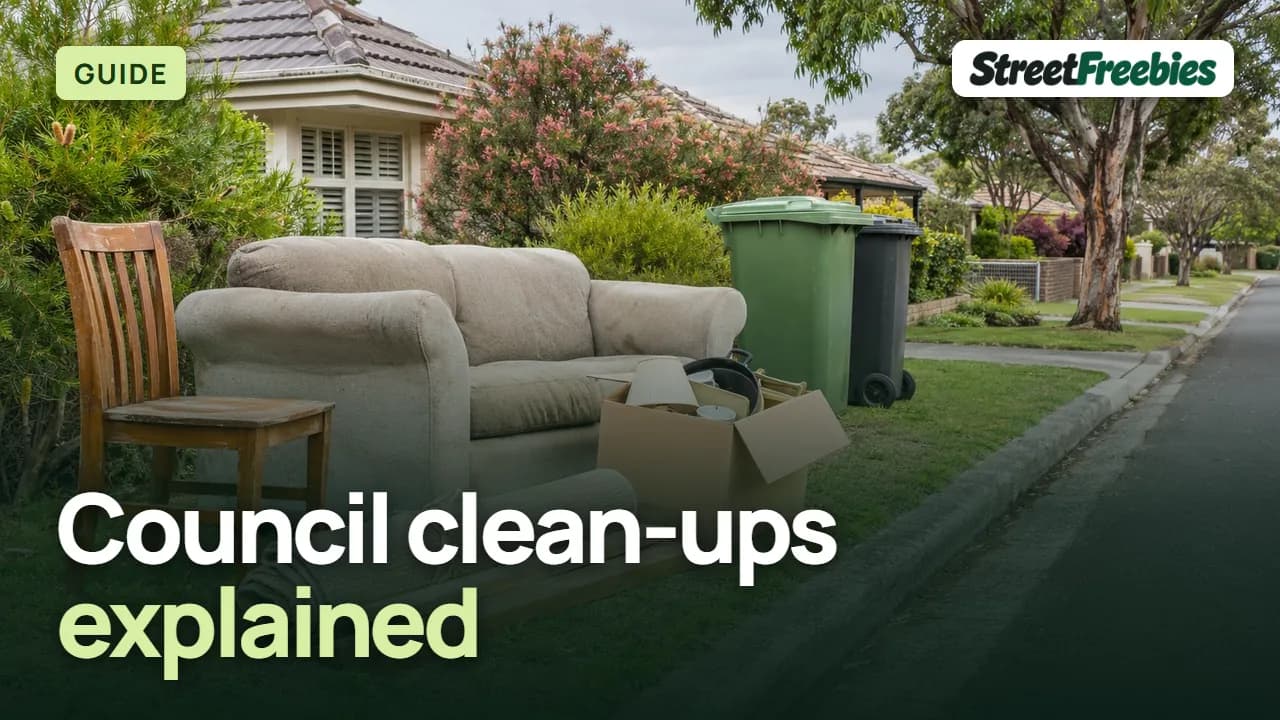
A council clean-up is a collection of large household items, such as furniture and appliances, that you put on the kerb for your council to remove. It goes by different names in each state, and some councils run scheduled collections while others require a booking, so always check your own council's website.
What is a council clean-up?
A council clean-up is a service many Australian councils offer for household items too big for your wheelie bin. You place items on the kerb or verge, and a council truck or contractor collects them.
Typical items include old furniture, bed bases, broken outdoor settings and some appliances. Each council decides what it accepts, how often it collects, whether you need to book, and whether there is any charge.
Rules vary a lot between councils, even neighbouring ones. This guide explains how collections usually work across Australia, but your council's website is the only reliable source for your dates, limits and accepted items.
What is a council clean-up called in my state?
The name changes depending on where you live, and some councils use their own terms. Knowing the local name helps when you search your council's website.
- NSW: often called a council clean-up or kerbside clean-up. Many councils offer booked services, and some run scheduled area clean-ups.
- Victoria: often called hard rubbish. Some councils run booked collections, and others run scheduled collections or offer vouchers or drop-off options.
- Queensland: often called kerbside collection or bulky item collection. Arrangements vary widely between councils.
- Western Australia: often called verge collection or verge-side collection. Many councils have separate verge collections for general junk and for green waste.
- South Australia: often called hard waste. Many councils offer booked hard waste collections.
- Tasmania: often called hard waste. Some councils run kerbside collections, while others rely on drop-off at waste transfer stations.
- ACT: often called bulky waste collection. The ACT has no local councils, so check the ACT Government's website.
- Northern Territory: often called hard rubbish or bulky waste. Services vary between councils and communities.
Find free items in your state on pages such as NSW, Victoria, Queensland and WA.
Do I need to book a council clean-up, or is it scheduled?
Councils generally use one of two systems, and some use both.
- Booked collections: you book online or by phone, choose an available date, and put items out shortly before it. Some councils limit how many bookings you get each year or how much you can put out each time.
- Scheduled collections: the council collects across a whole area or zone on set dates, and residents put items out during a set window beforehand.
Some councils charge for extra or larger collections. Others do not offer kerbside collection at all, and instead offer drop-off days, discounted or free tip entry, or vouchers. Check your council's website before you plan.
If you need to book, the process usually looks like this.
- Step 1: Search your council's website for the local name, such as "clean-up", "hard rubbish", "verge collection" or "bulky waste".
- Step 2: Check whether you are eligible. Many services are for residents only, and some exclude units or businesses.
- Step 3: Read the list of accepted and not accepted items.
- Step 4: Book a date online or by phone, and note any reference number.
- Step 5: Note exactly when you are allowed to put items out, and how to place them.
What items are usually accepted in a council clean-up?
Accepted items differ by council, but many collections take common household bulky items such as:
- Furniture, including couches, tables, chairs, bed frames and bookshelves.
- Some mattresses and bed bases, sometimes as a separate item.
- Some whitegoods and appliances, sometimes with special conditions.
- Outdoor furniture, play equipment and barbecues without gas bottles.
- Carpet and rugs, often rolled and tied.
- Small amounts of bundled timber or metal, depending on the council.
Many councils limit the total volume, often described as a size or number of items. Check your council's list before you put anything out.
What items are usually not accepted?
Many collections exclude hazardous, heavy or messy waste. Common exclusions include:
- Household chemicals, paint, oils, pool chemicals and solvents.
- Gas bottles, fire extinguishers, car batteries and tyres.
- Asbestos, and building or renovation waste such as bricks, concrete, tiles and plasterboard.
- Liquids, food waste and general rubbish in bags.
- Commercial or business waste.
- Car parts and large amounts of garden waste, unless your council runs a green waste collection.
Mattresses and e-waste are handled separately in some areas and accepted in others. Many councils and states run drop-off programs for paint, chemicals, batteries and e-waste. Your council's list is the one to follow.
How do I prepare items for a council collection?
A neat, safe pile helps the collection crew and keeps the street tidy.
- Step 1: Give away anything usable first. Post it on StreetFreebies a week or two before your collection.
- Step 2: Check your council's accepted items list, and set aside anything that is not accepted.
- Step 3: Put items out only within the allowed window.
- Step 4: Place items on your own kerb or verge, as your council directs. Keep them off the road and keep the footpath clear where required.
- Step 5: Stack items neatly, with small items bundled or boxed if your council allows.
- Step 6: Wrap broken glass and mirrors, and cover sharp edges.
- Step 7: For old fridges and freezers, follow your council's guidance, which commonly asks that doors are removed or secured so children cannot become trapped.
- Step 8: Keep anything you do not want collected well away from the pile.
When can I put items out for a council clean-up?
Most councils set a window before the collection date, such as a certain number of days, and putting items out earlier may breach local rules. Items left out too long can also attract dumping from others, get rained on, or block the footpath.
Your council will usually explain the window when you book, or in information about scheduled collections. If you are not sure, check your council's website or call them.
Collection crews may arrive any time on the collection day, and sometimes later than expected. Leave items out until they are collected, unless your council says otherwise.
Should I give items away before the clean-up?
Yes. Anything usable is better off with a new owner than in a truck. A week or two before your collection, post your items on StreetFreebies as Left outside or Kept inside. Whatever is not claimed can still go out for the council.
Giving items away first has real benefits.
- It reduces what your council has to collect and process.
- It may free up space within your council's limits for items that genuinely cannot be reused.
- It helps neighbours find furniture and household goods they need.
- It keeps useful items from being damaged by rain or broken during collection.
Our guide on giving away furniture has tips for quick pickups.
Can people take things from council clean-up piles?
It depends where you live. Some councils treat items placed out for a scheduled clean-up as council property once they are on the kerb, or prohibit scavenging from piles. Others do not address it. This is general information, not legal advice.
If you want items reused, the safest option is to give them away before they go on the pile. If you are collecting, check your council's rules first, never take anything from private property, and leave the pile tidy.
Read is it legal to take kerbside items for general information on kerbside items, FREE signs and private property.
What if my council does not offer kerbside collection?
Not every council offers kerbside bulky collections, and some only offer them occasionally. There are usually other options.
- Drop-off at a waste transfer station, tip or resource recovery centre. Fees and accepted items vary, so check first.
- Council drop-off days, vouchers or free tip passes, where offered.
- Reuse or tip shops that accept usable items.
- Charities that accept good-quality furniture and household goods, after you contact them.
- E-waste, paint, chemical and battery drop-off programs run by councils or state programs.
Check your council's website and your state EPA's website for programs in your area. Our guide to what you can give away explains which items can be listed on StreetFreebies.
What mistakes should I avoid with council clean-ups?
These common mistakes can lead to items being left behind, or to problems with your council.
- Putting items out too early, or leaving them out after the collection.
- Including items your council does not accept, such as chemicals, paint, gas bottles or building waste.
- Going over your council's volume limit.
- Placing items on the road, blocking the footpath or putting them on a neighbour's verge.
- Leaving fridges or freezers with doors intact, if your council asks for them to be removed or secured.
- Putting perfectly usable items out instead of giving them away first.
- Assuming last year's rules or dates still apply. Councils can change their services.
Quick checklist: council clean-ups
Use this list before your collection.
- Find the local name for your council's service and read its rules.
- Check whether you need to book, and book early if so.
- Give away usable items a week or two beforehand.
- Set aside anything not accepted, and find the right drop-off option.
- Put items out only within the allowed window.
- Stack items neatly, wrap sharp edges and keep the footpath clear.
- Follow your council's guidance on fridges and freezers.
- Check your council's rules before taking anything from other people's piles.
Frequently asked questions
When is my next council clean-up?
Dates vary by council and often by street or zone. Check your council's website or call them for your schedule or to make a booking.
Is hard rubbish the same as a council clean-up?
Yes, broadly. Hard rubbish is a common term in Victoria, while other states often use names like verge collection, hard waste or bulky waste.
Is a council clean-up free?
Some councils include a set number of collections in their services, while others charge or only offer drop-off options. Check your council's website for current details.
Can I put items out early?
Most councils set a window before the collection date, and putting items out earlier may breach local rules. Check your council's instructions.
Can I put a mattress out for a council clean-up?
Some councils accept mattresses in clean-ups, while others collect or recycle them separately. Check your council's website before putting one out.
Can my neighbours add things to my clean-up pile?
Some councils count everything at your address towards your booking or limit, so extra items may cause problems. Check your council's rules and talk to your neighbours first.
What happens to items collected in a council clean-up?
It depends on the council and its contractors. Some materials may be recovered or recycled, but much can end up in landfill, which is why giving usable items away first helps.
What if the council does not collect my items?
Contact your council to check your booking or schedule. Items may be left behind if they are not accepted, are over the limit, or were put out in the wrong place.