How to Get Rid of Furniture for Free and Keep It Out of Landfill
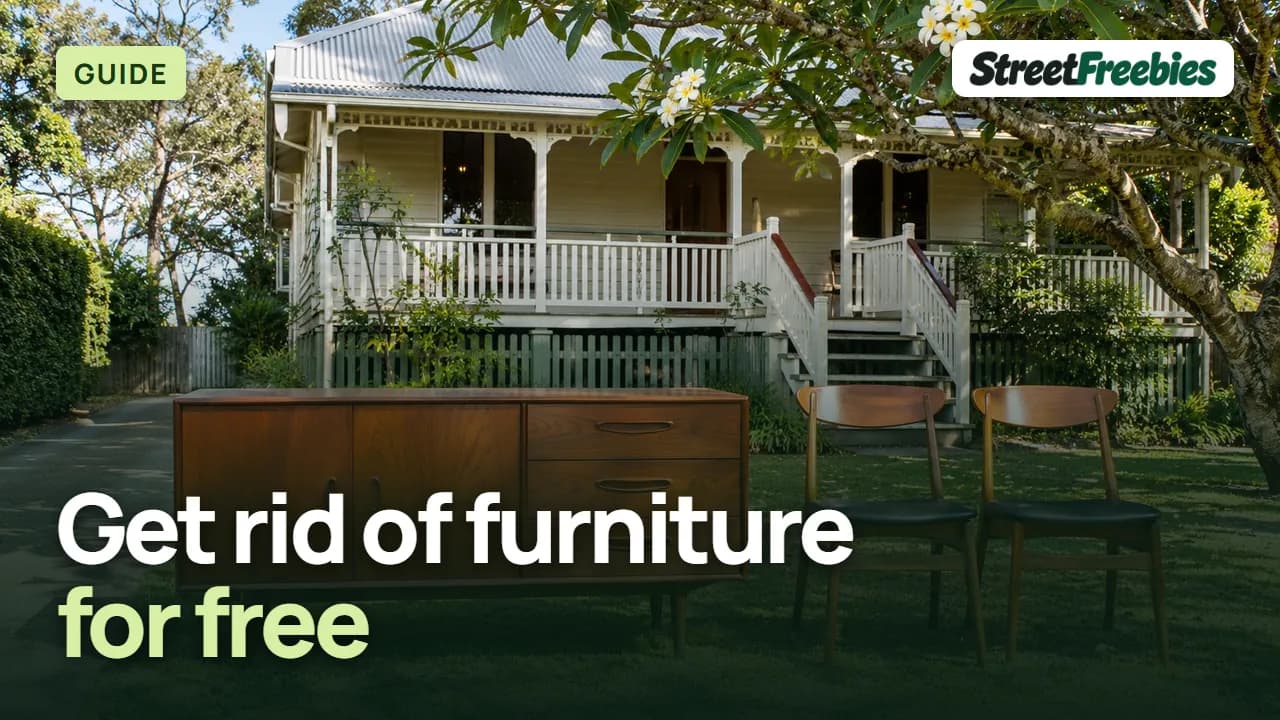
The easiest way to get rid of furniture for free is to give it away to someone nearby: clean it, photograph it in good light, and list it with honest details and measurements. If nobody takes it, try a charity that collects or your council's bulky item collection.
What is the easiest way to get rid of furniture for free?
Give it away locally. A neighbour who needs a bookshelf, desk or dining table will often collect it within a day or two, and it costs you nothing.
On StreetFreebies you sign in with Google, take a photo, and AI suggests a title for your listing. You choose whether the item is Left outside or Kept inside, and people nearby can find it in free furniture.
You do not need to arrange transport, pay for removal or wait for a council booking. The collector comes to you.
Why give furniture away instead of throwing it out?
Furniture is bulky, and much of it still has years of use left when people replace it. Giving it away keeps it in use, which is better than recycling or landfill.
- It is free for you and free for the person who takes it.
- It is usually faster than waiting for a council collection.
- It helps people setting up a first home, students, renters and families.
- It reduces what councils need to collect and process.
Even worn pieces can be useful. A scratched table can be sanded, and a tired chest of drawers can be painted. Many collectors are looking for project pieces.
How should I prepare furniture before giving it away?
A few minutes of preparation makes your furniture far more appealing. Work through these steps.
- Step 1: Empty every drawer, shelf and cupboard. Check for personal papers, keys and small items.
- Step 2: Wipe down hard surfaces and vacuum upholstery, including under cushions.
- Step 3: Tighten loose screws, hinges and handles.
- Step 4: Decide whether to take large items apart. Beds, wardrobes and large shelving units are often easier to move in pieces.
- Step 5: Put screws, bolts and fittings in a labelled bag and tape it securely to the item.
- Step 6: Find the assembly instructions if you still have them, or note the brand and model name.
- Step 7: Measure height, width and depth, and weigh up whether it needs two people to carry.
How do I photograph furniture so it gets collected quickly?
Clear photos are the single biggest factor in how quickly furniture goes.
- Shoot in daylight, near a window or outside.
- Clear the area around the item so it stands out.
- Show the whole piece, straight on, then from an angle.
- Add close-ups of any scratches, stains or damage, so there are no surprises.
- Open drawers and doors in one photo so people can see the inside.
- For sets, photograph all the pieces together.
When you take your photo, AI suggests a title. Check and edit it so it accurately describes the item, for example "Solid timber 6-seater dining table" rather than just "Table".
What should I write in a free furniture listing?
A good description answers the questions collectors would otherwise have to ask.
- What it is, including material, brand or style if known.
- Measurements: height, width and depth.
- Condition, including any damage, wear or missing parts.
- Whether it comes apart, and whether you have the instructions or fittings.
- Access details: stairs, a lift, narrow hallways or a steep driveway.
- What the collector needs: a trailer, a van, a second person or straps.
For example: "Three-seater fabric couch, grey. About 2 metres wide. Some wear on the arms, no stains or pets. Ground floor, easy access. Needs two people and a van or trailer."
Honest listings get collected faster and save you from no-shows and awkward handovers.
Should I leave furniture outside or keep it inside for pickup?
StreetFreebies has two ways to give items away. Choose the one that suits the piece and your situation.
- Left outside: anyone can take it, first come, first served. The listing runs for 24 or 48 hours. This suits sturdy items such as outdoor furniture, metal shelving and timber pieces that will survive a shower of rain.
- Kept inside: you choose mornings, afternoons or evenings, collectors request a 30-minute time, and you approve one person. The listing shows your pickup address. Listings run for up to 72 hours. This suits couches, mattresses in good condition, valuable pieces and anything you need help to carry.
If rain is forecast, Kept inside is usually the better choice for anything upholstered or made of particleboard. How it works explains each option in more detail.
Can I leave furniture on the kerb with a FREE sign?
Many people do, but rules about leaving items on the footpath or nature strip outside a scheduled clean-up differ between councils. Some councils may treat it as illegal dumping if items are left out too long or block the footpath. Check your council's website before putting furniture out.
If you do put items out, follow these tips.
- Place them on your own nature strip, not in the street or on someone else's verge.
- Keep the footpath clear for prams, wheelchairs and people walking.
- Add a clear FREE sign, and list it as Left outside so people know it is there.
- Bring it back in, or arrange another option, if nobody takes it within your listing period.
How do I arrange a safe inside pickup?
Kept inside pickups keep your item dry and give you control over who comes and when.
- Step 1: When you post, choose mornings, afternoons or evenings that suit you.
- Step 2: Review pickup requests. Each collector asks for a 30-minute time.
- Step 3: Approve one person. Share extra notes, like a unit number or gate code, with them if needed.
- Step 4: Move the item close to the front door or garage if you can, so the collector does not need to walk through your home.
- Step 5: Have someone else at home if possible, and keep pets out of the way.
- Step 6: Tell the collector what to bring, such as a trailer, straps or a helper.
- Step 7: Check the item together at the door, so the collector is happy before they load it.
You do not have to help carry heavy items. If you choose to, lift carefully and stop if it does not feel safe. Read our safety tips for more.
What if nobody takes my furniture?
Do not give up after one try. Relist with better photos, add measurements, or switch from outside to inside pickup so it stays dry. Sometimes it is simply a matter of timing.
If it still does not go, there are other options.
- Charities: some charities collect or accept good-quality furniture, but most have rules about condition and what they take. Contact them first, and never leave furniture outside charity shops or bins.
- Council bulky item collections: many councils offer booked or scheduled collections. Read our council clean-up guide.
- Resource recovery centres and tip shops: some accept usable furniture for resale.
- Recycling: some materials, such as metal frames, may be accepted for recycling at your local waste facility.
Please do not dump furniture on the kerb or anywhere else without permission. Illegal dumping can lead to fines and leaves a mess for others.
What are my options for unwanted furniture in each state?
If you cannot give furniture away, a council collection is often the next step. Names and services vary, so check your council's website for what is available, how to book and what is accepted.
- NSW: many councils offer a council clean-up or kerbside clean-up.
- Victoria: many councils offer hard rubbish collections.
- Queensland: many councils offer kerbside or bulky item collections.
- Western Australia: many councils run verge collections.
- South Australia: many councils offer hard waste collections.
- Tasmania: many councils offer hard waste collections or drop-off options.
- ACT: often called bulky waste collection. Check the ACT Government's website, as the ACT has no local councils.
- Northern Territory: councils may offer hard rubbish or bulky waste collections.
Giving furniture away before these collections means more of it gets reused.
What mistakes should I avoid when giving away furniture?
These common mistakes slow things down or cause problems.
- Posting dark, blurry photos or a single photo of a cluttered room.
- Leaving out measurements, which leads to collectors arriving with the wrong vehicle.
- Hiding damage, which leads to wasted trips and awkward handovers.
- Leaving upholstered furniture outside in the rain.
- Forgetting to empty drawers of personal papers.
- Asking for money, a swap, or a favour. Everything on StreetFreebies must be free with no conditions.
- Listing items that are unsafe or prohibited. Our guide to what you can give away explains the rules.
Moving soon? Our moving house giveaway guide has a timeline for clearing out.
Quick checklist: giving away furniture
Use this list before you post.
- Empty drawers and cupboards.
- Clean the item and tighten loose fittings.
- Bag and tape screws and fittings if you take it apart.
- Measure height, width and depth.
- Take clear daylight photos, including any damage.
- Write an honest description with access details.
- Choose Left outside or Kept inside.
- Check your council's rules before leaving anything on the kerb.
- Have a backup plan if nobody takes it.
Ready? Post your furniture in a minute.
Frequently asked questions
How fast will my furniture be collected?
It depends on the item, the photos and your area. Practical pieces such as tables, shelves, desks and outdoor furniture often go quickly.
Can I leave furniture on the kerb with a FREE sign?
Many people do, but council rules about leaving items on the footpath or nature strip differ. Check your council's website first, and keep the footpath clear.
Can I ask for a small payment or a swap?
No. Everything on StreetFreebies must be free, with no selling, swapping or conditions.
Will people see my address?
Both Left outside and Kept inside listings show the pickup address so people can find the item. For Kept inside items you can also share extra notes, like a unit number or gate code, with the one person you approve.
Should I give away a damaged couch?
Light wear is fine if you describe it honestly. Couches with mould, pests or strong odours are better sent to a council collection.
Do charities take all furniture?
No. Most charities have rules about condition and the types of furniture they accept, so contact them before you drop anything off or book a pickup.
What happens to furniture nobody takes?
You can relist it, contact a charity, take it to a resource recovery centre or book a council collection. Never leave it on the kerb indefinitely.
Do I have to help the collector carry furniture?
No, but let them know in your listing if they will need a second person. If you choose to help, lift carefully and stop if it does not feel safe.