Kerbside Pickup: How to Find and Collect Free Kerbside Items
A kerbside pickup means collecting free items that someone has left on the public kerb or nature strip for others to take. Find them on local listings or while out walking, check the item is genuinely free and on public land, and collect it safely and tidily.
What is a kerbside pickup?
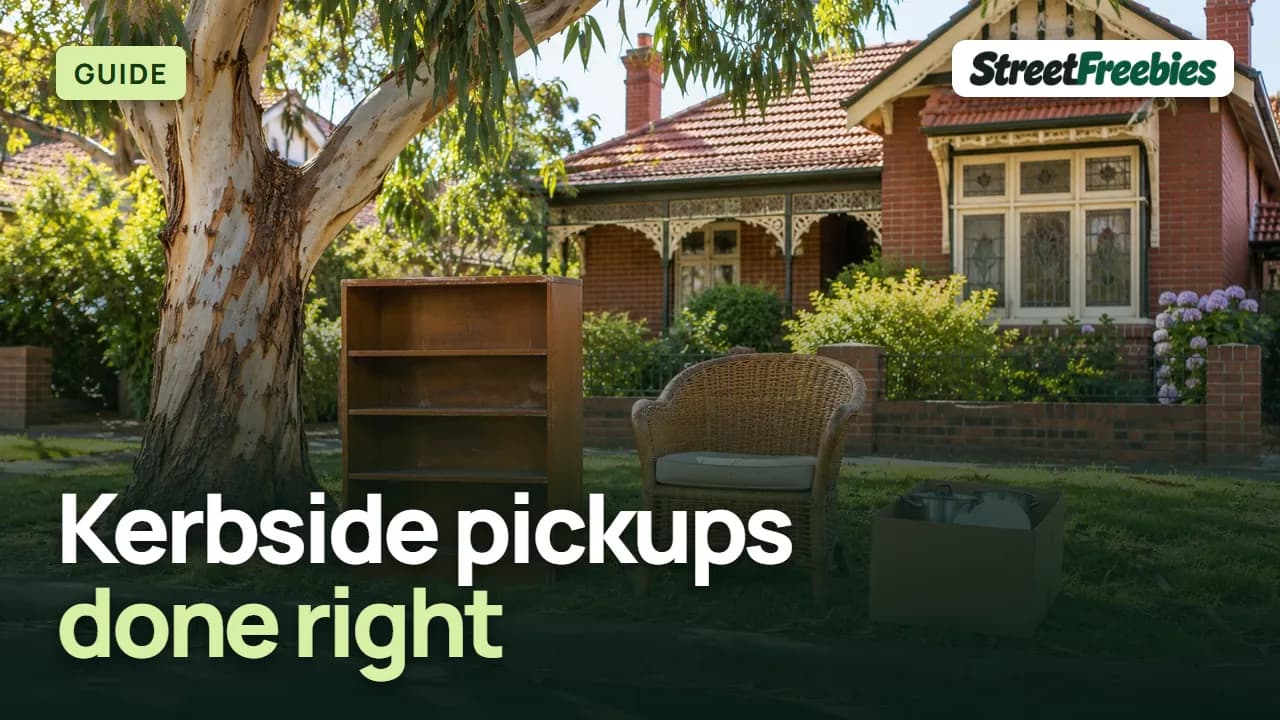
A kerbside pickup (often spelled "curbside" in American English) is when you collect something a person has put out on the kerb or nature strip for anyone to take. It might have a FREE sign, or it might be part of a council clean-up pile.
Kerbside finds are a great source of furniture, shelving, pots, timber and toys. Many items are perfectly usable and only need a wipe down. For the giver, it is a quick way to pass things on. For the collector, it is free furniture and gear, and one less item headed for landfill.
Kerbside pickups work best when everyone follows a few simple rules: only take what is clearly free, never go onto private property, and leave the area tidy.
How do I find free kerbside items near me?
The easiest way is to check listings near you rather than driving around hoping. On StreetFreebies, there are two kinds of kerbside listing.
- Left outside: posted by the owner, who has put the item out for anyone to take. First come, first served, listed for 24 or 48 hours.
- Community spotted: posted by someone who saw the item on a public kerb or nature strip. The listing says whether there was a visible FREE sign, or "No sign: spotted on the kerb, check before taking". Listed for 6 to 24 hours.
Browse your city, such as Sydney or Melbourne, and sort by distance. Check the "Still there" and "Gone" votes before you head out, and set up alerts so you hear about new kerbside items quickly. For more places to look, see our guide to finding free stuff near you.
What's the best time to look for kerbside freebies?
Kerbside items appear all year, but some times are often busier.
- Weekends, when people clear out garages, sheds and spare rooms.
- Around the end of the month, when many people move house.
- The days before a council clean-up, hard rubbish or verge collection in your area.
- After a renovation, or when a household is downsizing.
Good items often go within hours, so the time a listing was posted matters more than the day of the week. Daylight is the best time to collect: you can see what you are picking up, and you are less likely to disturb neighbours.
How do I know if a kerbside item is free to take?
Look for clear signs that the owner wants it taken, and be cautious when there are none.
- A FREE sign on the item is the clearest signal.
- A Left outside listing from the owner is also clear.
- The item is on the public kerb or nature strip, not in a front yard, driveway, porch or carport.
- The item is not part of a council clean-up pile, unless your council allows people to take items from piles.
If there is no sign, the item might be waiting for a buyer, a friend, a removalist or a council booking. If you can, ask the owner. If you cannot ask, leave it. Our guide is it legal to take kerbside items has more general information. It is not legal advice.
What is kerbside collection called in my state?
Councils across Australia run collections for large household items, and each state tends to use different names. These names are general, and some councils use their own terms.
- NSW: often called a council clean-up or kerbside clean-up.
- Victoria: often called hard rubbish.
- Queensland: often called kerbside collection or bulky item collection.
- Western Australia: often called verge collection or verge-side collection.
- South Australia: often called hard waste.
- Tasmania: often called hard waste.
- ACT: often called bulky waste collection.
- Northern Territory: often called hard rubbish or bulky waste.
Some councils treat items placed out for these collections as council property or prohibit taking them. Check your council's website, and read our council clean-up guide for how collections usually work.
What should I bring for a kerbside pickup?
Keep a small kerbside kit in your car so you are ready when something good appears.
- Gloves and closed shoes.
- Straps, rope or ockys for tying items down.
- Blankets or old towels to protect the item and your car.
- A tape measure.
- A basic toolkit with screwdrivers and Allen keys for taking apart larger items.
- A torch for checking underneath and inside items, even in daylight.
- Bin bags or a box for loose parts.
- A helper for anything heavy, bulky or awkward.
How do I collect kerbside items safely?
A little preparation prevents injuries and damage to your car. Follow these steps.
- Step 1: Park legally and safely. Never block driveways, footpaths, bike lanes or traffic while loading.
- Step 2: Look before you touch. Check for broken glass, nails, splinters, spiders and anything sharp.
- Step 3: Put on gloves and check the item over, including underneath and inside drawers.
- Step 4: Measure it against your car before you lift.
- Step 5: Remove loose parts such as shelves, glass panels and cushions and carry them separately.
- Step 6: Lift heavy items with two people. Bend your knees, keep the load close and do not twist.
- Step 7: Secure it properly in your car or trailer so it cannot shift or fall.
- Step 8: Check the area is clean before you leave, and vote "Gone" on the listing.
Do not plug in electrical items that have damaged cords, or that have sat out in the rain, until a qualified person has checked them. See our safety tips for more.
What should I check before taking a kerbside item home?
Kerbside items have usually been outside for a while, so check them carefully before they come inside.
- Soft furnishings: look in seams, corners and under cushions for stains, damp, mould and signs of pests such as bed bugs or cockroaches.
- Timber and particleboard: check for swelling, water damage, cracks and wobbly joints.
- Metal items: check for rust, sharp edges and broken welds.
- Glass and mirrors: look for chips and cracks that could fail later.
- Electrical items: check cords, plugs and casings, and have anything doubtful checked by a qualified person.
If you are unsure, wipe items down and leave them in a garage or outside under cover for a day before bringing them in.
What should I avoid picking up from the kerb?
Some items are not worth the risk. Skip anything that looks unsafe, wet through or contaminated.
- Mattresses and couches with stains, odours or signs of pests.
- Gas appliances and heaters, and electrical items with exposed or damaged wiring.
- Cots, prams and car seats with unknown history.
- Chemicals, paint tins, fuel containers and gas bottles.
- Building materials that may contain asbestos, such as old fibro sheeting. Do not break or handle material you are unsure about.
- Broken glass, cracked mirrors, or furniture that could collapse.
If in doubt, leave it for the council collection.
What is good kerbside etiquette?
Good manners keep kerbside giving going in your street.
- Take only what you will use, and take the whole item rather than stripping parts from it.
- Leave the area as tidy as you found it, or tidier. Do not scatter or pull apart piles.
- Be quiet and considerate, especially early in the morning or at night.
- Do not knock on doors or enter properties unless the owner has invited contact.
- If an owner asks you to leave something, leave it, and thank them anyway.
- Vote "Gone" once you have taken an item, so others do not make a wasted trip.
- If you spot something good you cannot use, post it as a Community spotted item so someone else can.
What mistakes do people make with kerbside pickups?
These are the most common problems, and all of them are easy to avoid.
- Assuming everything near a house is free. Anything on private property is not yours to take.
- Picking through council clean-up piles in areas where the council prohibits it.
- Overloading a car or tying items down badly, which is dangerous on the road.
- Bringing home upholstered furniture without checking for pests.
- Leaving a mess after taking part of a pile.
- Driving across the suburb for an item that was posted many hours ago without checking the votes first.
Quick checklist: kerbside pickups
Run through this before every kerbside pickup.
- Is the item on the public kerb or nature strip, not private property?
- Is there a FREE sign, an owner listing, or a clear reason to think it is free?
- Does your council allow taking items from clean-up piles?
- Have you checked the votes and when it was posted?
- Do you have gloves, straps, blankets, a tape measure and a helper?
- Have you checked the item for damage, damp, mould and pests?
- Did you leave the area tidy and vote "Gone"?
Frequently asked questions
What is the difference between kerbside and curbside?
They mean the same thing. Kerb is the Australian and British spelling, while curb is the American spelling.
Is it rude to take kerbside items?
No, not when an item is clearly left out as free on the public kerb. Most people put things out because they want them reused, so taking them politely and tidily is welcome.
Can I take just part of a kerbside item?
It is better to take the whole item or leave it. Stripping parts often leaves a mess and makes the rest harder for anyone else to use or for the council to collect.
Can I post a kerbside item I saw but do not own?
Yes, as a Community spotted item if it is on the public kerb or nature strip. You say whether there was a visible FREE sign, and the listing runs for 6 to 24 hours.
Is kerbside furniture safe to bring inside?
Often, yes, after a careful check. Inspect seams and joints for pests, damp and mould, clean it well, and leave anything doubtful outside or in a garage.
Can I collect kerbside items at night?
It is safer and more considerate to collect in daylight. You can see what you are picking up, and you avoid disturbing neighbours.
What if a kerbside item is already gone when I arrive?
Vote "Gone" on the listing so others know. It helps the next person avoid the same trip.
Do I have to check with the council before taking kerbside items?
Rules vary between councils, especially for clean-up piles. If you are unsure, check your council's website before taking anything.