Free Baby and Kids Items: What's Safe to Pass On and What to Check
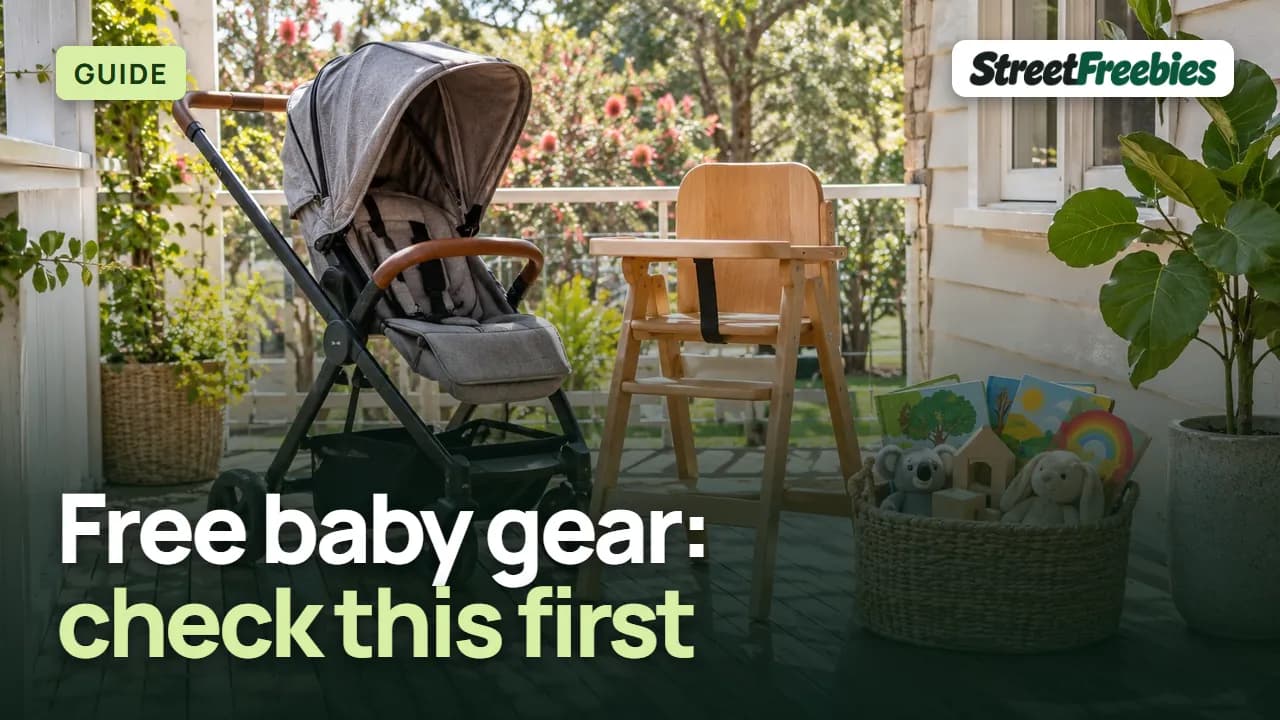
Many free baby and kids items, such as clothes, books and toys, are safe to pass on after a clean and a check for damage and recalls. Take extra care with cots, prams and especially car seats, where unknown history, missing parts or age can make them unsafe.
Is it safe to use free second-hand baby items?
Often, yes. Children outgrow things quickly, so plenty of clothes, books, toys and gear are given away in good condition.
The key is to check every item before use. Look for damage and missing parts, and check product recalls on productsafety.gov.au, the ACCC's Product Safety Australia website. It also has information about safety standards for cots and other children's products, and what to look for when buying or using them.
This guide is general information. For specific products, always follow the manufacturer's instructions and current guidance from Product Safety Australia and your state authorities. Browse free baby and kids items near you.
Which baby and kids items are usually safe to pass on?
Some items are low risk after a good clean and a quick check for damage.
- Clothes, shoes, hats and bibs. Browse free clothing and shoes.
- Books, puzzles and board games.
- Bath toys, stacking toys and soft toys in good condition.
- Play mats and storage boxes.
- Kids furniture such as bookcases and small tables, if stable and in good repair.
- Dress-ups and craft supplies.
- Bikes, scooters and balance bikes, with a check of brakes, wheels and handlebars.
Even with low-risk items, check for loose parts, broken plastic and sharp edges.
Which baby and kids items need extra care?
Some items affect sleep, travel or safety, so they need a careful check, and some are best avoided if you do not know their history.
- Cots, portable cots, bassinets and cot mattresses.
- Prams, strollers and baby carriers.
- Car seats and booster seats.
- High chairs, bouncers, change tables and baby gates.
- Bike helmets, which may be damaged in ways you cannot see after a fall.
- Toys with button batteries, magnets or small parts.
If you cannot confirm that an item is complete, undamaged and not recalled, it is safer to pass on it.
How do I check if a baby product has been recalled?
Checking for recalls only takes a few minutes. Do it before you collect the item, and again before use.
- Step 1: Find the brand, model name and model number. These are often on a label or sticker under or behind the product.
- Step 2: Go to productsafety.gov.au and search for the brand and product.
- Step 3: Read any recall notices carefully, including the batch numbers or dates affected.
- Step 4: If the product is recalled, follow the instructions in the notice. Do not use or give it away.
- Step 5: If there is no label or you cannot identify the product, be cautious, especially for sleep and travel products.
You can also contact the manufacturer with the model details to ask about recalls or replacement parts.
How do I check a second-hand cot?
A cot needs to be sturdy, complete and in good repair.
- Check that all parts, screws and bolts are present and tight, and that nothing is cracked, split or broken.
- Make sure it has not been modified or repaired with non-original parts.
- Check the sides and base are secure, and that any drop sides or adjustable parts lock firmly.
- Look for peeling paint, sharp edges, protruding bolts and anything a child could catch clothing or fingers on.
- Check for gaps that could trap a child's head or limbs.
- Ask for the assembly instructions, or find them from the manufacturer.
Product Safety Australia has current guidance on cot safety, so check it before use, along with any recalls on the model.
What about cot mattresses, bassinets and other sleep products?
Sleep products are worth extra care. Follow recognised safe sleeping guidance and the manufacturer's instructions.
- A cot mattress should be clean, firm, flat and dry, and fit the cot snugly with no large gaps at the sides or ends.
- Avoid mattresses with sagging, tears, stains or mould.
- Check bassinets and portable cots are complete, stable and assembled exactly as the instructions describe.
- Do not add extra padding, pillows or soft items to a baby's sleep space unless current recognised guidance says it is safe.
If you are not sure about a second-hand sleep product, it is safer to choose another option.
What should I check on a pram or stroller?
Test a pram or stroller before you take it home.
- Brakes hold firmly when you push the pram on a slope.
- The harness is complete, with straps that are not frayed and buckles that lock and release properly.
- The frame locks open and does not fold unexpectedly.
- Wheels spin freely and are firmly attached.
- Hinges, joints and the handlebar are not cracked or bent.
- Fabric, hoods and baskets are in good condition.
Search the brand and model on productsafety.gov.au for recalls, and check you have the instructions or can find them online.
Should I accept a free second-hand car seat?
Be very cautious. A car seat that has been in a crash may be damaged in ways you cannot see, and car seats have a limited life set by the manufacturer.
- Only consider one from someone you know and trust, who can confirm its full history.
- Do not use a seat that has been in a crash, has missing parts or labels, has frayed straps, or has no instructions.
- Check the manufacturer's labels and instructions for its use-by or expiry guidance.
- Make sure it meets the Australian standard and suits your child's size and age.
- Follow your state road authority's guidance on child restraints.
- Consider having it fitted or checked by a trained restraint fitter.
If you are giving one away, describe its age and history honestly. If it has been in a crash or is past the manufacturer's recommended lifespan, do not give it away.
What should I check on toys, high chairs and other kids items?
Toys and small gear are usually easy to pass on, but a quick check matters.
- For babies and toddlers, avoid toys with small parts that could be a choking hazard.
- Check battery covers are secure, especially on anything with button batteries, which are a serious hazard if swallowed.
- Look for loose magnets, broken plastic, exposed stuffing and sharp edges.
- High chairs should have a complete, working harness, a stable base and secure trays.
- Baby gates should be complete, with all fittings, and installed as the instructions describe.
- Change tables should be stable, with secure sides.
Books and toys are listed under free books and toys.
How do I clean second-hand baby and kids items?
Clean everything before use, following any care labels or manufacturer instructions.
- Wash clothes, bedding and soft toys on a suitable cycle.
- Wipe hard plastic toys and high chairs with warm soapy water, then rinse and dry.
- Vacuum pram fabrics and seats, and wash removable covers if the label allows.
- Check crevices for crumbs, mould and dirt.
- Let items dry fully before use or storage.
Avoid harsh chemicals on items babies may put in their mouths, and rinse well.
How do I give away baby items responsibly?
Giving away baby and kids items is a great help to other families, so do it carefully.
- Step 1: Check the item for recalls on productsafety.gov.au.
- Step 2: Clean it and keep all parts together.
- Step 3: Include the instructions if you have them, or note the brand and model so the collector can find them.
- Step 4: Be honest about age, wear, missing pieces and history, especially for cots, prams and car seats.
- Step 5: Do not give away anything that is recalled, damaged, incomplete, or a car seat that has been in a crash or is past its recommended lifespan.
- Step 6: Post it with clear photos, including any labels.
Our guide to what you can give away explains prohibited items, and our safety tips cover pickups.
Quick checklist: free baby and kids items
Use this list before you collect or give away any baby or kids item.
- Find the brand and model, and check for recalls on productsafety.gov.au.
- Check all parts are present, undamaged and tight.
- Get the instructions, or find them from the manufacturer.
- For cots and mattresses, check stability, fit and condition.
- For prams, test brakes, harness and folding locks.
- For car seats, only accept one with a fully known history, within its lifespan.
- Check toys for small parts, button batteries and magnets.
- Clean everything before use.
For more places to find free things for your family, see our guide to finding free stuff near you.
Frequently asked questions
Where can I check if a baby product has been recalled?
Search for the product on productsafety.gov.au, run by the ACCC. You can also contact the manufacturer with the model details.
Are second-hand car seats safe?
Only if you know the full history, it has never been in a crash, it is within the manufacturer's recommended lifespan and it meets the Australian standard. If you cannot confirm all of that, do not use it.
Can I use a second-hand cot mattress?
Check that it is clean, firm, flat, dry and fits the cot snugly with no gaps. If in doubt, get a new one.
What baby items are safest to pick up free?
Clothes, books, bibs, bath toys and play mats are usually low risk after a good clean and a check for damage.
Can I use a second-hand bike helmet for my child?
It is safer not to unless you know its history, because helmets can be damaged by a fall in ways you cannot see. Follow the manufacturer's guidance on replacement.
What if a cot has no instructions?
Look up the brand and model on the manufacturer's website. If you cannot identify it or confirm how it should be assembled, it is safer not to use it.
Can I give away a recalled baby product?
No. Recalled goods cannot be given away on StreetFreebies, and you should follow the instructions in the recall notice.
Should I wash free soft toys before giving them to my child?
Yes. Wash them according to the care label and let them dry fully, and check seams and eyes are secure.